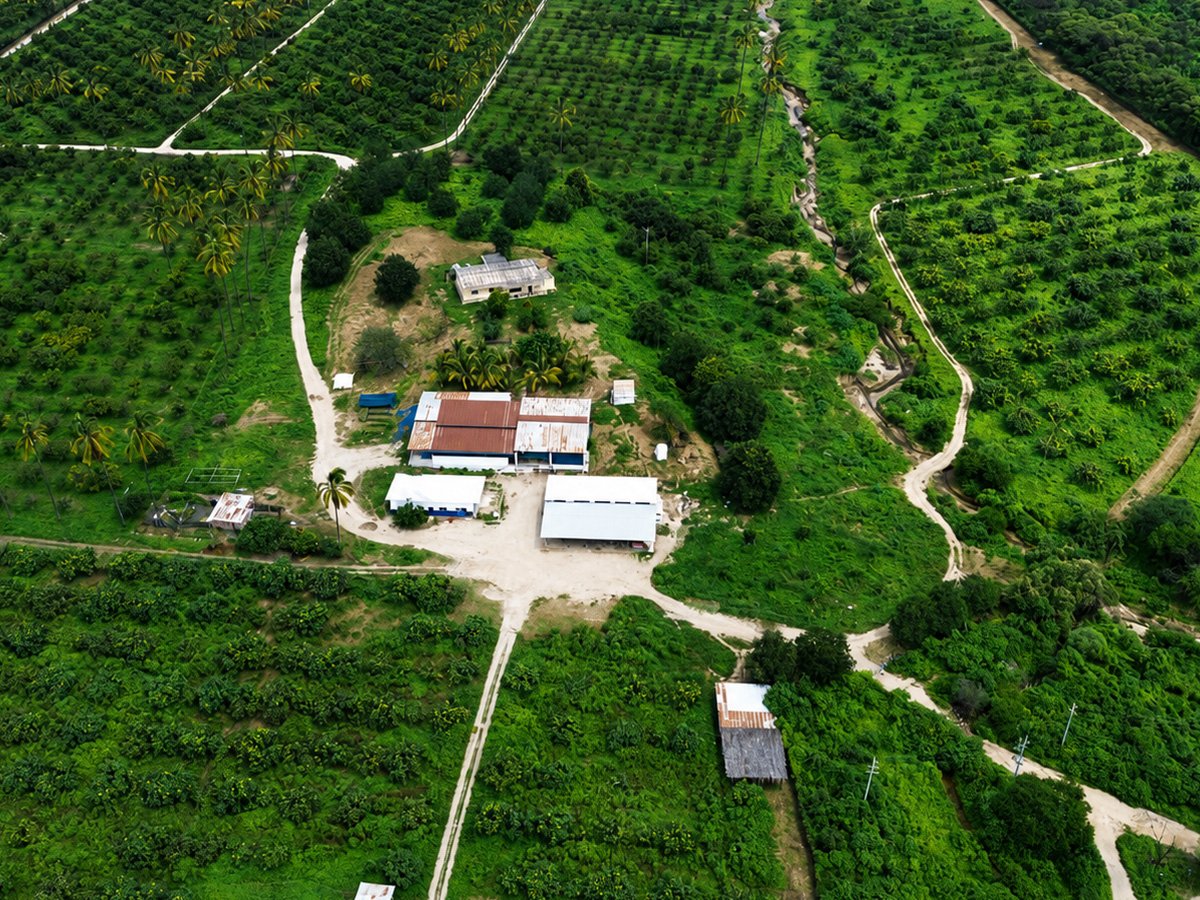
More than five decades of farming experience shape our regenerative agriculture in Peru. Today, Agrícola EEB Perú Orgánico grows certified organic Kent and Keitt mangoes on a 104-hectare farm in Motupe, managed as one circular system.
We are a Peruvian agricultural company producing certified organic mango, coconut, and honey through a regenerative model designed to restore, not deplete, the land.
Our Story
From One Family Farm to a Regenerative Model
Our story began in 1968, when agronomist Eduardo Espinosa Burneo acquired a 20-hectare farm in Motupe, Lambayeque. Together with his partner Eliana, he became a pioneer in exporting Peruvian mangoes to Europe and the United States, surviving Peru’s agrarian reform and rebuilding what had been lost.
Since 2015, his daughter Claudia Espinosa, a lawyer by training and a farmer by choice, has led the company’s transition into a fully organic, regenerative, and circular production system. What started as 20 hectares is today a 104-hectare farm, managed as a single living ecosystem.
OUR JOURNEY
A Legacy of Regenerative Agriculture in Peru
1968
Eduardo “Yayo” Espinosa Burneo founds the farm in Motupe with 20 hectares.
1969 to 1975
The land is lost to Peru’s agrarian reform and later rebuilt from scratch.
2015
Claudia Espinosa takes over and begins the transition to organic, regenerative agriculture.
Today
104 hectares, fully certified organic, operating as one integrated regenerative system.
Our Regenerative Model
A Farm Designed as One Living System
Our production model treats soil, crops, livestock, water, and people as one interconnected system, not a set of isolated activities. Every element is designed to serve more than one function, so the farm regenerates as it produces.
Living Soil
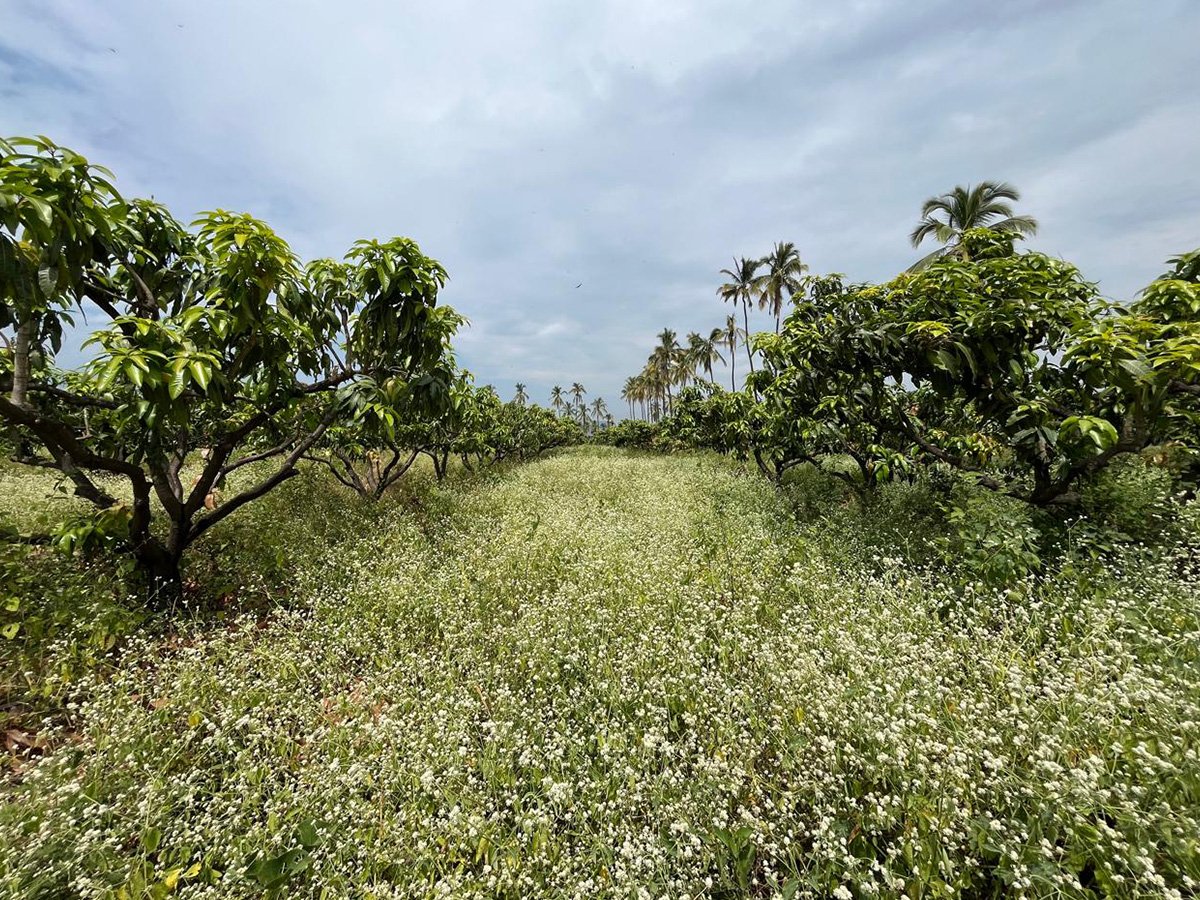
No tillage, permanent ground cover, and on-farm compost, bokashi, and biol production keep nutrients circulating instead of being lost.
Integrated Livestock
Sheep from local shepherd families graze the farm daily, turning vegetation into fertility while supporting neighboring livelihoods.
Water Stewardship
A dual water system, groundwater wells plus seasonal flows from the Motupe River, reduces climate risk and supports both drip and gravity-fed irrigation.
Biodiversity Corridors
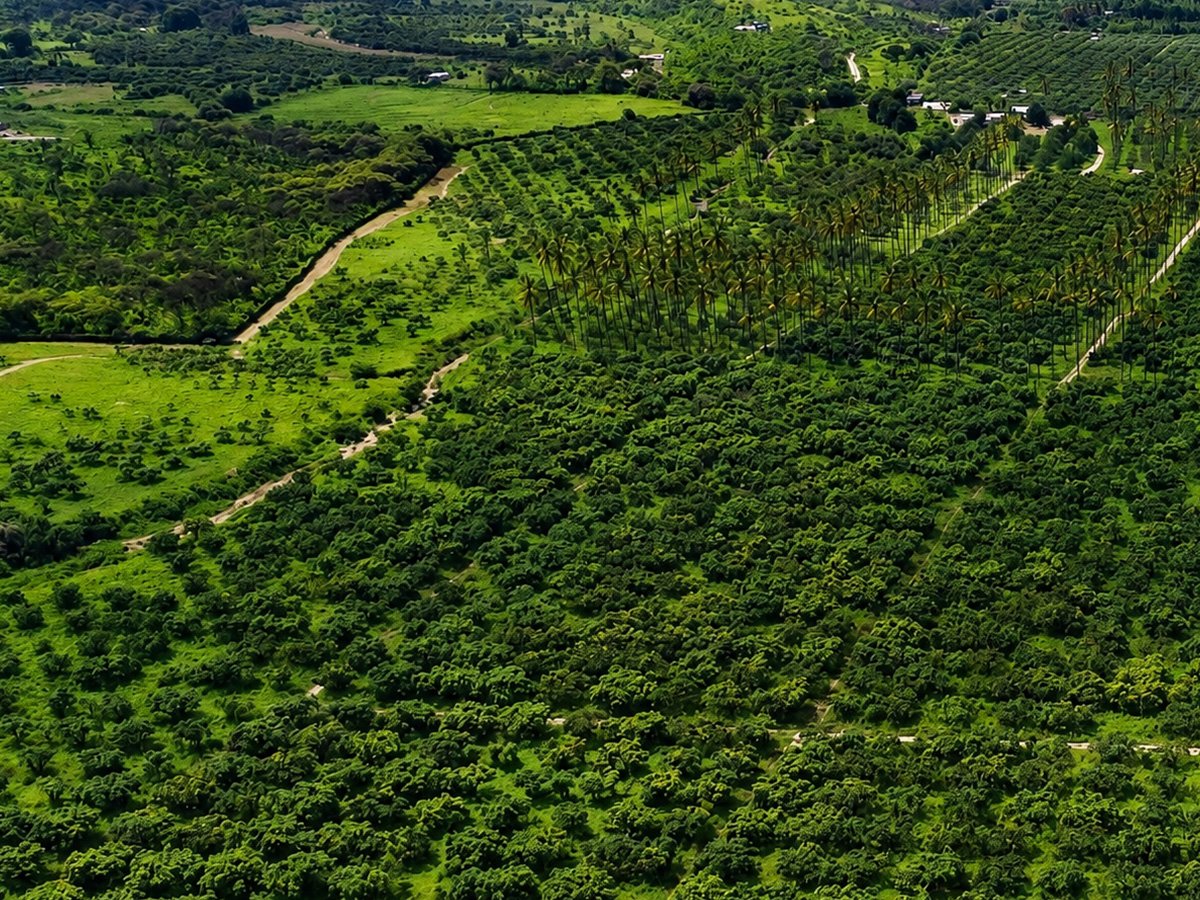
A 2-kilometer biological corridor and 10 hectares of dry forest restoration connect native habitat across the farm.
Zero-Waste Circularity
Organic residues, pruning material, and manure from neighboring producers become fertilizer instead of waste: 348.5 tonnes recovered between 2020 and 2024.
Climate Resilience
Deep silty clay loam soils, a tropical dry climate, and cool winter nights give Kent and Keitt mangoes stable flowering and predictable harvests.
What We Grow
Certified Organic, Grown in a Living Landscape
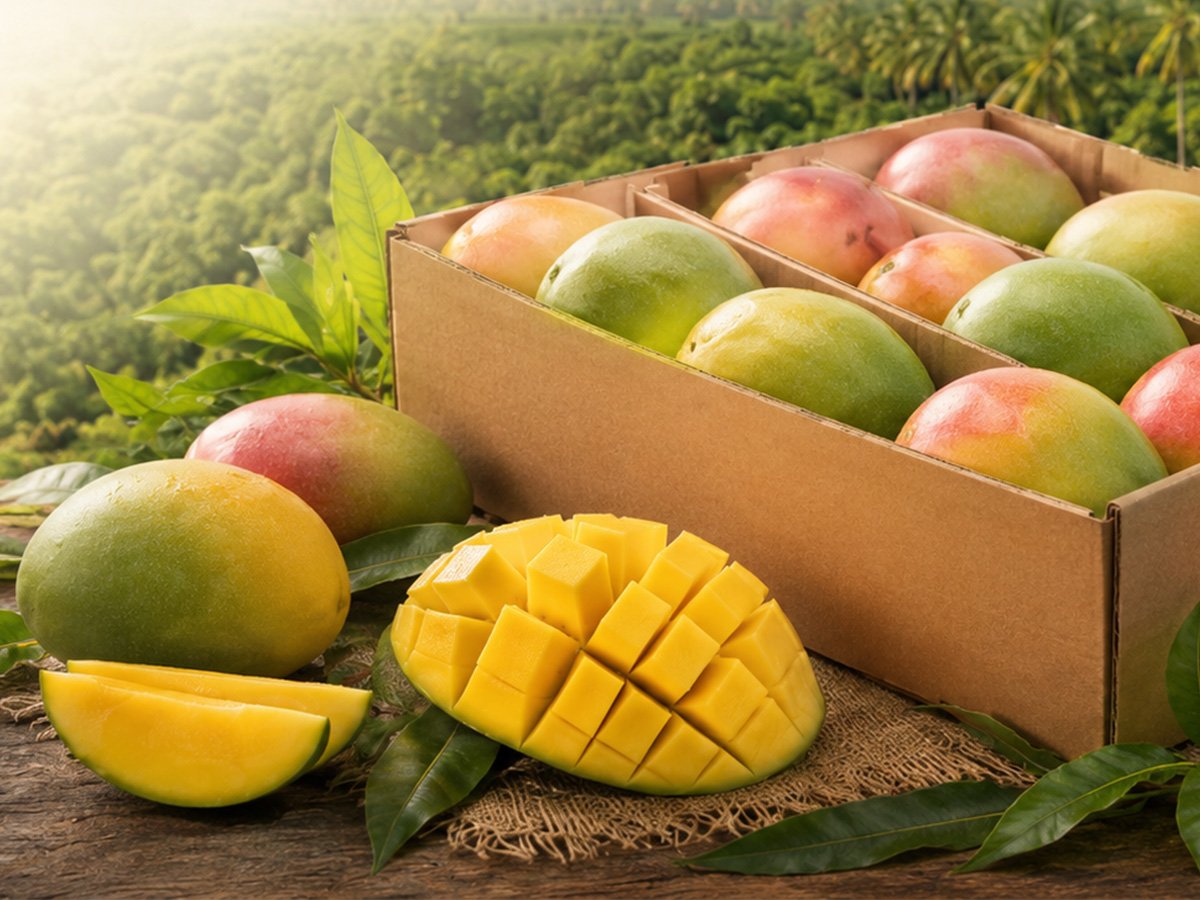
Organic Mango: Kent and Keitt
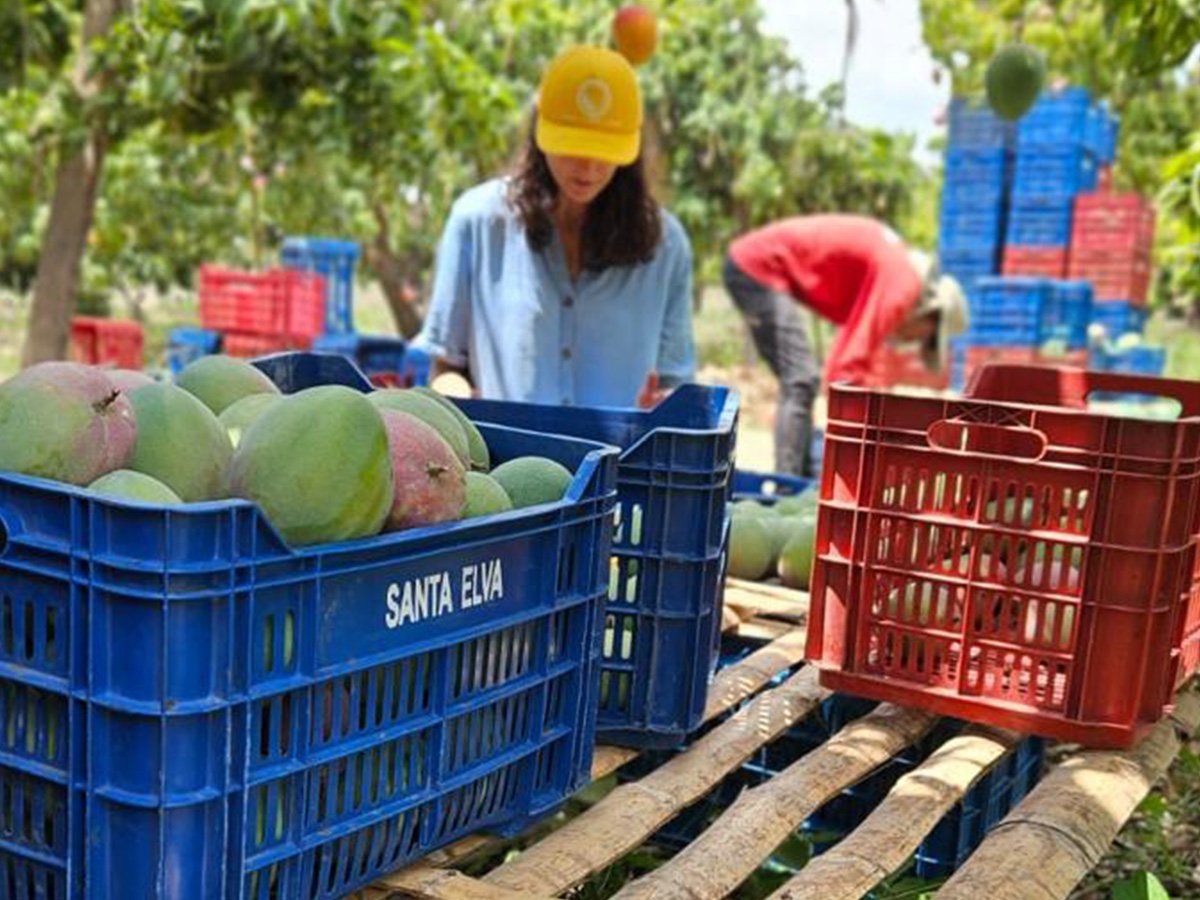
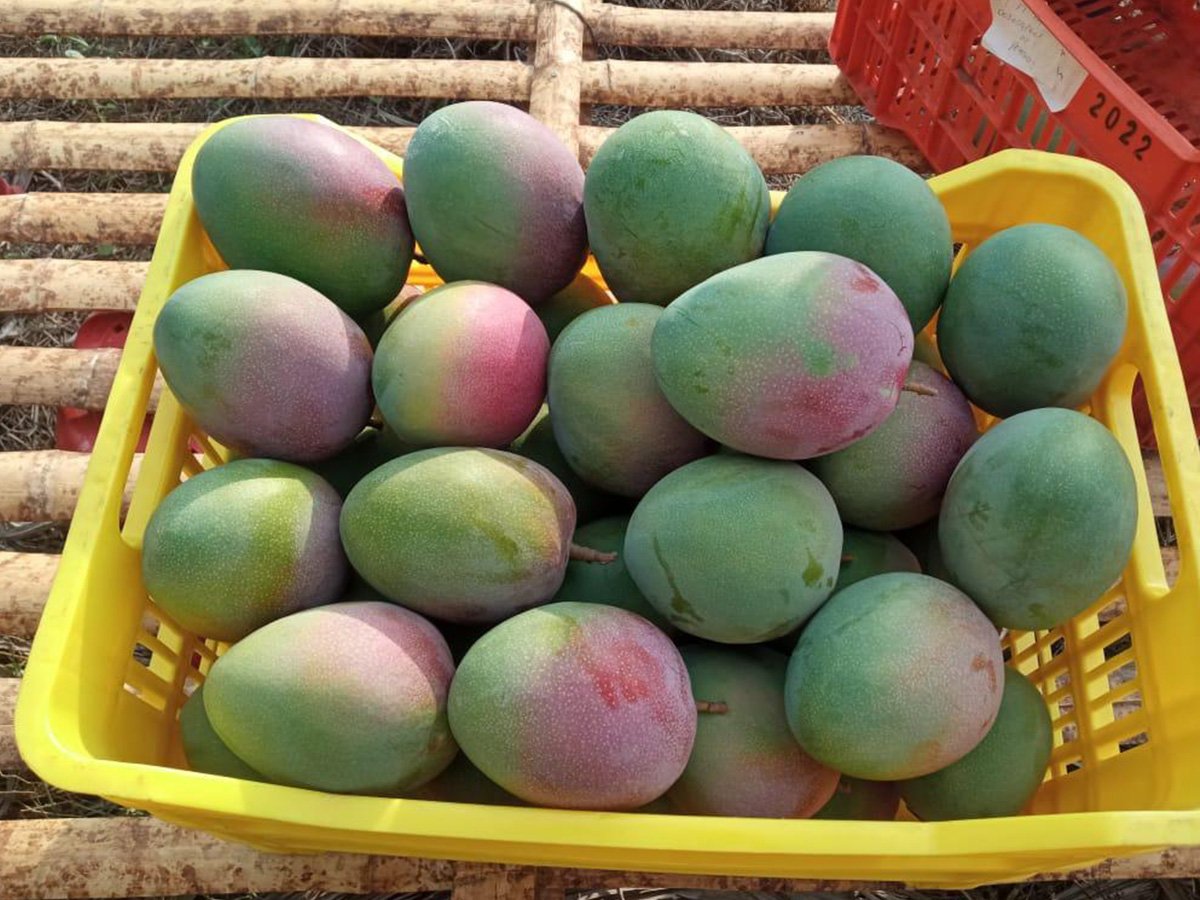
Mango is the heart of our regenerative agriculture in Peru, grown across 75 certified organic hectares with 5,785 Kent and 5,646 Keitt trees, harvested January through March and shipped fresh to the United States and Europe.
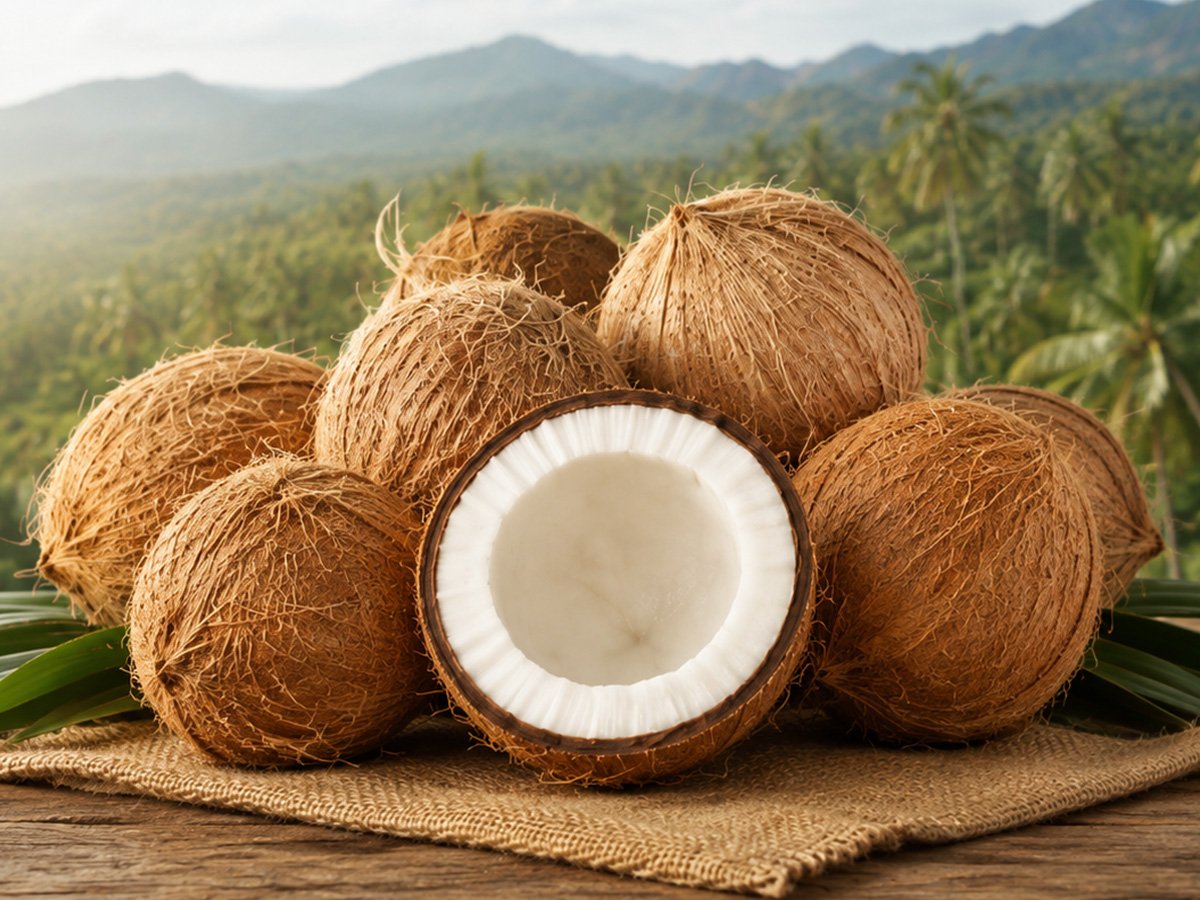
Coconut
1,386 coconut trees grow along the farm’s internal roads, adding biomass and harvest diversity across three seasons a year (March, July, and November) without competing with mango for land or water.
Beekeeping
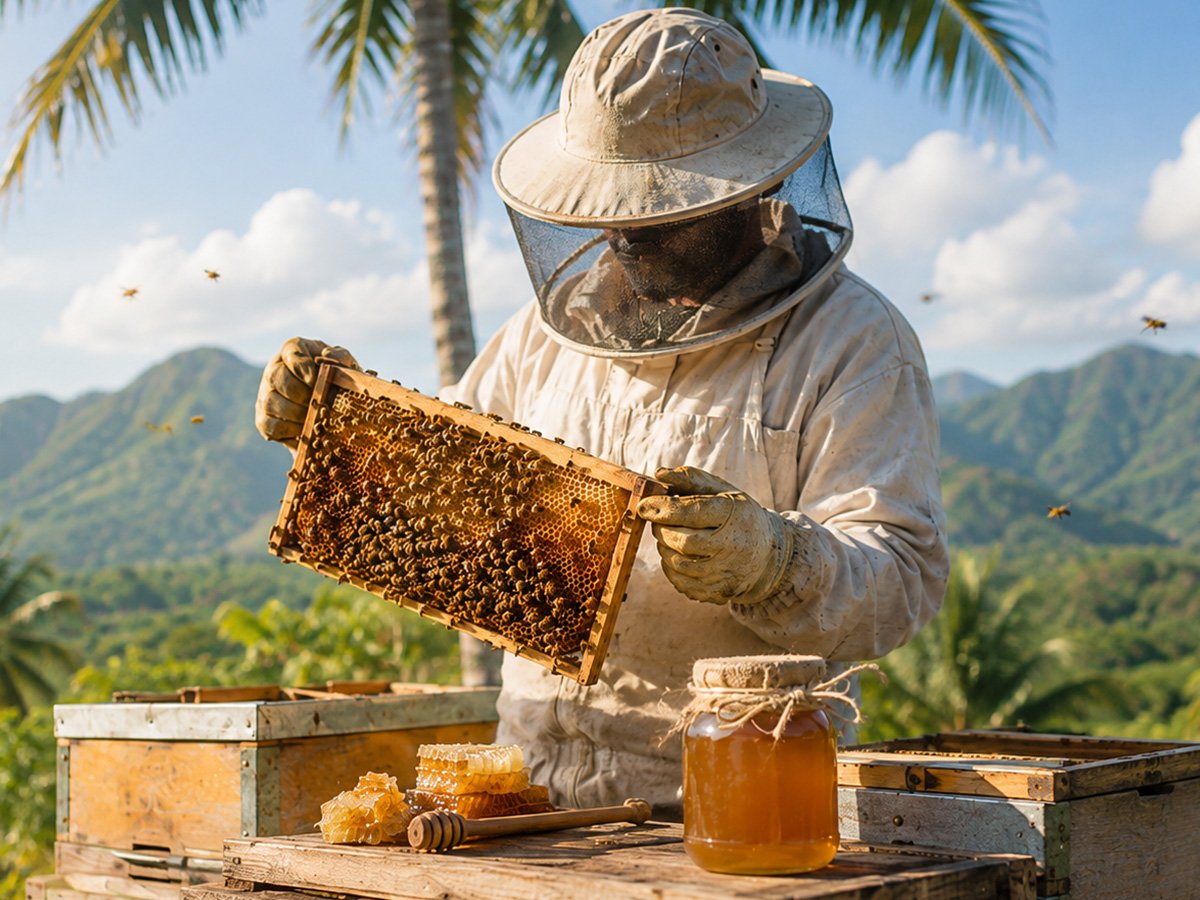
About 20 hives, all descended from wild swarms that settled naturally on the farm as it went organic. A living indicator of ecosystem health, and a source of honey sold in the domestic market.
Availability and Commercial Terms
As part of practicing regenerative agriculture in Peru, we don’t publish a fixed price list. Availability, pricing, and commercial terms are coordinated directly based on product, volume, season, and each buyer’s requirements.
These numbers show what regenerative agriculture in Peru looks like in practice, based on 2024 and 2025 operating, certification, and educational records.
104 ha
managed as a single, continuous farm
75 ha
certified organic mango production
10 ha
dedicated to native dry forest restoration
2 km
biological corridor connecting native habitat
11,431
mango trees (5,785 Kent and 5,646 Keitt)
~20
beehives, all naturally established
348.5 t
manure recovered from local producers (2020 to 2024) and returned to the soil
171
students hosted for field learning since 2022
1968
the year it all began
1,386
coconut trees integrated into the landscape
Figures based on 2024 and 2025 records.
Certifications and Compliance
Certified to International Standards
Regenerative agriculture in Peru also means meeting strict international standards. Our organic production is certified across Peru, the United States, and the European Union, in addition to GLOBALG.A.P
GLOBALG.A.P. (IFA v6.0)
Covers primary production and handling, enabling access to the U.S., EU, and Canada.
GGN 4063061970916
USDA Organic (NOP)
Full compliance with United States organic regulations for production and handling.
ID 1780883880
European Union Organic
Direct export access to the EU organic market under harmonized standards.
Regulation (EU) 2018/848
Peru Organic (SENASA)
National organic compliance, reinforcing operational integrity at the local level.
CU 883880PER-01.2025
Why Partner With Us
Why Buyers and Partners Choose EEB Perú Orgánico
More than five decades of experience
In the crop, the territory, and international markets.
We grow what we sell
We're producers, not intermediaries. We control origin and handling end to end.
Certified to international standards
Across Peru, the U.S., and the EU, plus GLOBALG.A.P.
Regenerative agriculture in practice
Measurable soil, water, and biodiversity outcomes, not just a label.
Direct, transparent relationships
With every buyer and partner. No layers in between.
A long-term view
Built to generate economic, environmental, and social value for everyone connected to this land.
See the Farm in Motion
Agricola EEB Peru Organico is the company. Srta Flor de Mango is its voice, sharing the harvest, the packing house, and daily life on the farm one reel at a time.
Impact and Community
Regeneration That Reaches Beyond the Farm
Impact isn’t a side project here. It’s built into how the farm runs every day. Local shepherd families graze their flocks on the property under controlled, herbicide-free conditions. We buy manure from neighboring livestock producers at a fair price, turning a routine chore into extra income and a fertility input for our soil.
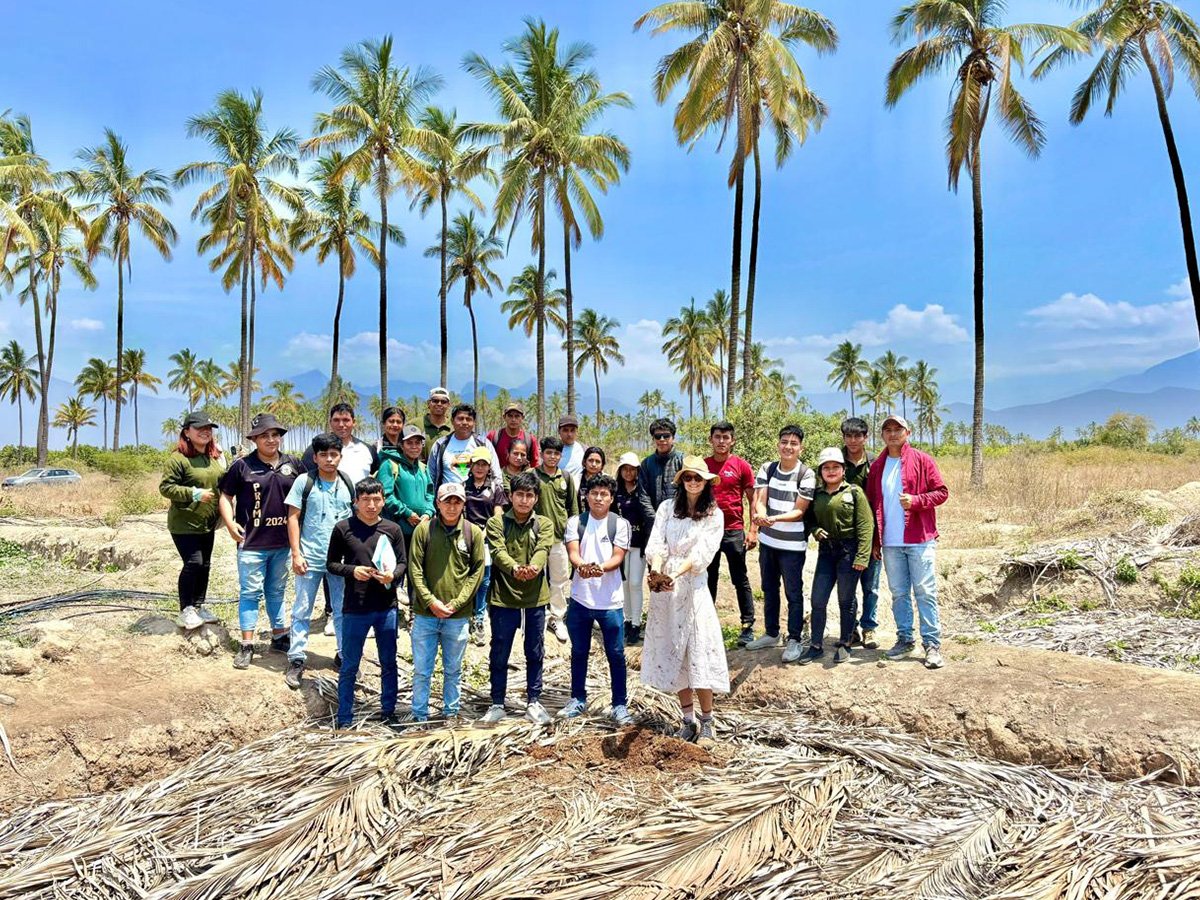
And every year, students from technical institutes in Íllimo, Olmos, and Motupe visit the farm to learn organic and regenerative practices firsthand.
171 students hosted since 2022
11 local livestock producers and shepherds involved in the system
Free workshops on organic fertilizers and biopesticides for employees and neighbors
Open to Partnerships, Investment, and Research
We work with buyers, investors, funders, researchers, and organizations interested in regenerative agriculture in Peru, biodiversity, climate resilience, and long lasting rural development.
Field visits and learning experiences can be arranged in advance, based on farm conditions. For students, researchers, buyers, or anyone curious about regenerative agriculture in practice.
Agrícola EEB Perú Orgánico practices regenerative agriculture in Peru every day. Srta. Flor de Mango is its voice, sharing the day-to-day stories, people, and lessons behind the operation on Instagram and TikTok.
A Peruvian agricultural company based in Motupe, Lambayeque, dedicated to certified organic production and a regenerative, circular farming model.
What is your main product?
Certified organic mango, the Kent and Keitt varieties, sold to the fresh market and to industrial processing in the United States and Europe.
What else do you produce besides mango?
The farm also integrates coconut, beekeeping, livestock, and on-farm compost and bioinputs production.
Is your production certified?
Yes. Our operation holds organic certifications for Peru, the United States, and the European Union, plus GLOBALG.A.P.
What does regenerative agriculture mean at EEB?
It means farming with natural processes instead of against them: permanent ground cover, no herbicides or tillage, on-farm bioinputs, integrated livestock, and active protection of biodiversity. All of it aimed at rebuilding soil health and ecosystem resilience.
Contact
Let's Talk
Whether you’re sourcing organic mango, exploring an investment in regenerative agriculture in Peru, planning a research visit, or just curious about how we farm, tell us a bit about what you’re looking for.